
The Impact of Air Velocity in High-Induction Diffusers
It is widely known that excessive air velocity inside diffusers, particularly metal ones, can generate airflow noise that is incompatible with the expected sound level for the type of activities carried out in the treated space.
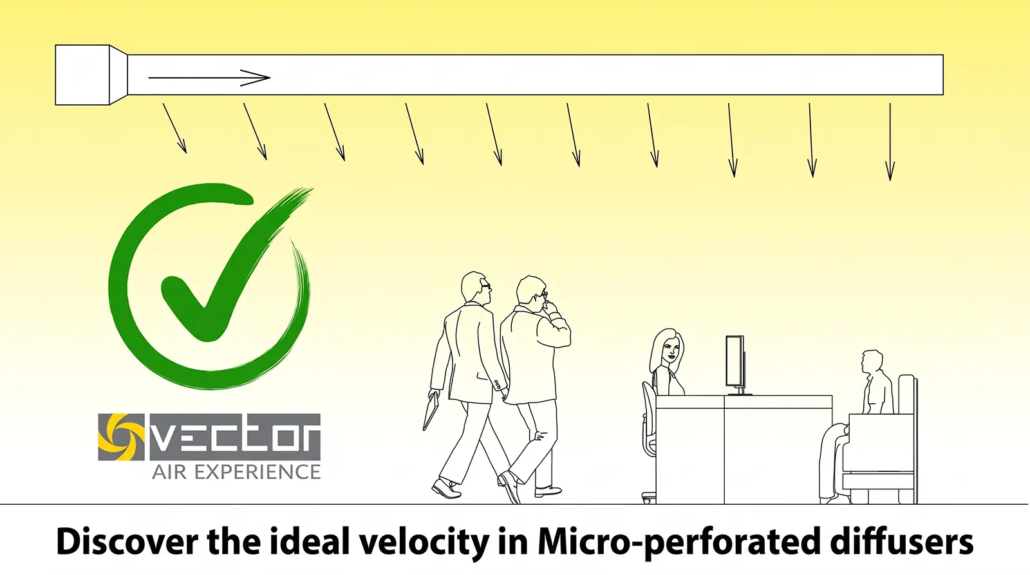
The proper air diffusion velocity.
Inside high-induction metal ducts, velocities must be kept below 7 m/s, while ideal velocities range around 4–6 m/s.
Particularly in industrial environments, this rule is often applied with a certain degree of flexibility, given that the acceptable noise level in these cases is certainly higher than in strictly residential settings.
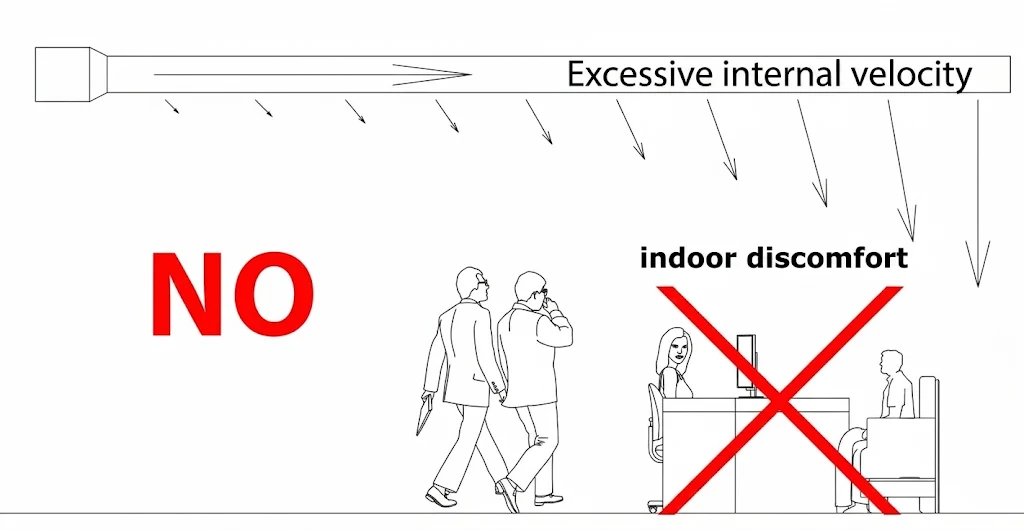
However, excessive velocities—exceeding 9–10 m/s—not only affect indoor noise levels, but also create axial airflow components that can generate areas of discomfort.
As shown in the schematic representation, the vector flow concentrates its action in one area of the room to be treated, causing a thermal imbalance that can only be partially mitigated by the positioning of the air returns.
In micro-perforated fabric ducts—which feature a natural sound-absorbing effect and can therefore operate at higher velocities even in the constant presence of people—this aspect must still never be overlooked.
Friction Effect
Above 10 m/s, a friction effect also occurs in fabric diffusers, which over time can cause wear to the internal coatings that make the fabric fibers airtight, thereby reducing their service life.
Furthermore, above 8 m/s, it is advisable to install units that allow gradual startup or to fit soft-start devices that prevent the violent impact of air against the duct end cap, which could cause damage.
Respect the velocity limits recommended by Vector
Last but not least for fabric diffusers: high velocity also requires higher pressure to keep the duct inflated and to avoid—especially in the initial section near the inlet—fabric fluttering and vibrations that also lead to faster product deterioration.
Ultimately, it is always important to adhere as closely as possible to the recommended ideal velocities, relying on VECTOR for specialist consultancy in order to also ensure sound long-term economic management.
